Joyride Records
AI-powered operating system for modern record labels.
Overview
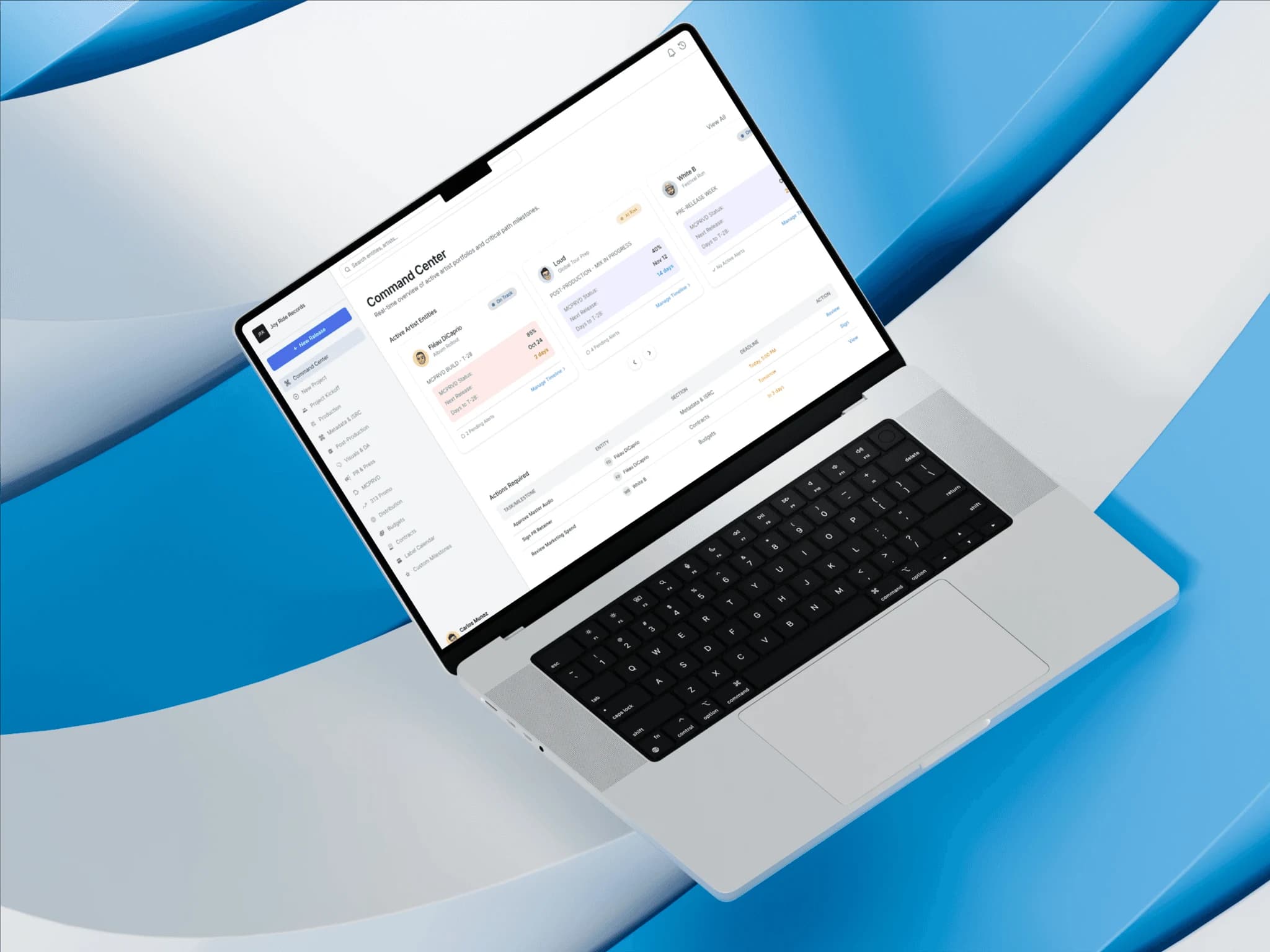
Joyride Records is an enterprise SaaS platform for modern record labels. It gives a label one workspace for its artists, releases, projects, teams and budgets, and for the operational work that ties them together.
Inertial Fields designed the product: how it is structured, the workspaces people use every day, and the design system underneath them.
The challenge
A label manages far more than the music. One release can involve artists, project managers, producers, marketing teams, PR agencies, distributors, publishers, photographers, booking teams, finance and outside collaborators, all working to the same dates.
The product had to hold all of that without the interface becoming the problem.
- Navigation that scales
- A growing set of operational modules, organised so the product stays easy to move around as it expands.
- Clear priorities
- Project managers need to see what needs their attention without going looking for it.
- Different artists, different workflows
- No two artists or releases run the same way, so the structure had to flex.
- Dates that cascade
- A release date sets off a chain of deadlines across every department, and those links had to be visible.
- Two audiences
- Project management and the artist’s own view of their work are different jobs, and needed different experiences.
- Room for what comes next
- A foundation that could support automation and AI-powered workflows later on.
Our approach
Five principles shaped every screen.
- The release is the centre
- A release is not a single task. The product treats it as the object that connects projects, artists, timelines, budgets and teams.
- Complexity in layers
- Primary information comes first. Detail sits one level down, there when it is needed and out of the way when it is not.
- Modular by artist
- Project managers choose the operational blocks each artist needs instead of forcing every project into one template.
- One source of truth
- Status, responsibilities, deadlines and budgets live in one shared workspace.
- Built to grow
- Reusable components, structured navigation and modular layouts, so new workflows fit in without a redesign.
What we designed
The product is organised around a small number of workspaces, each built for a specific job.
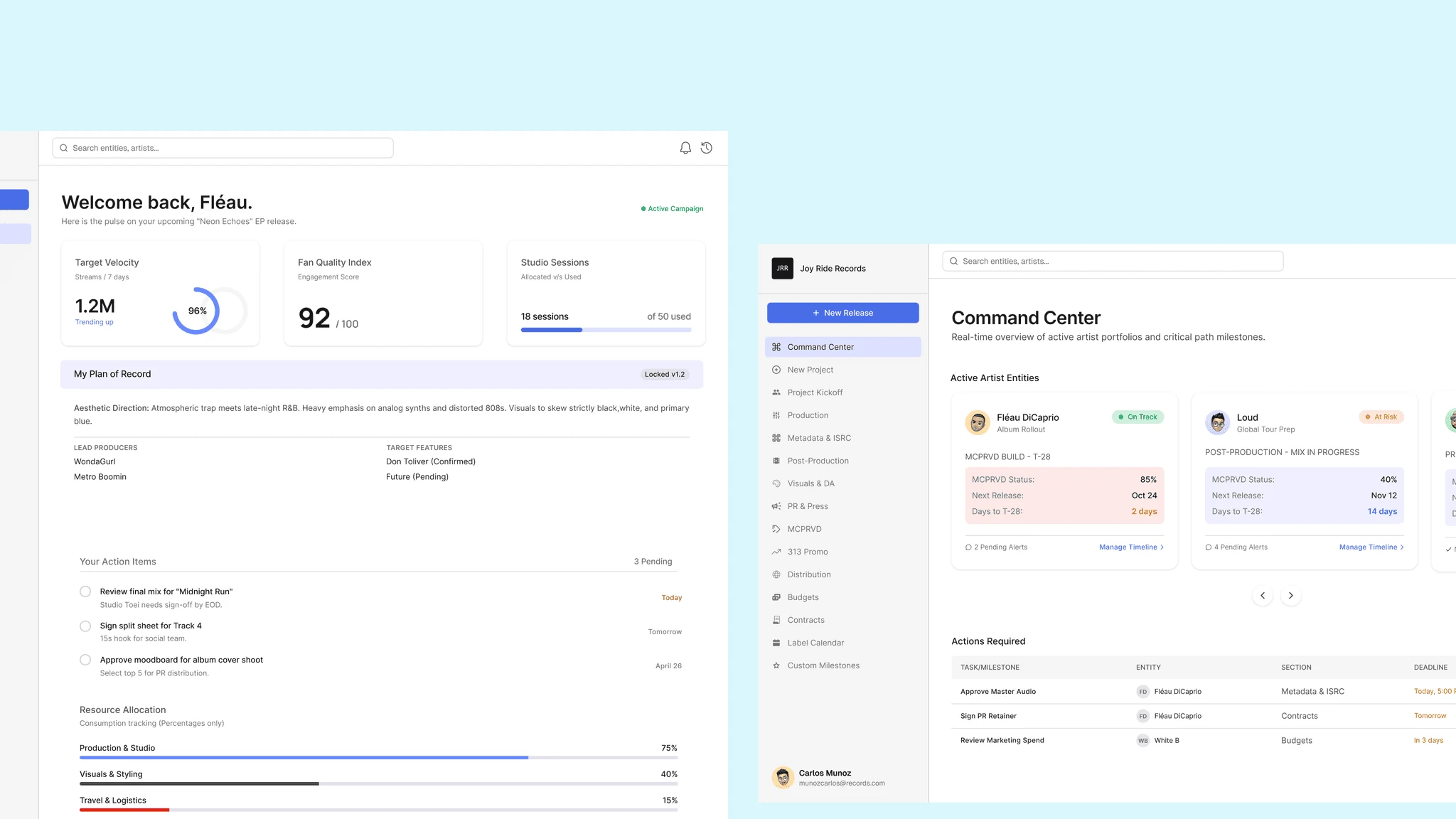
- Command Center
- The project manager’s overview, prioritising the information needed to make decisions quickly.
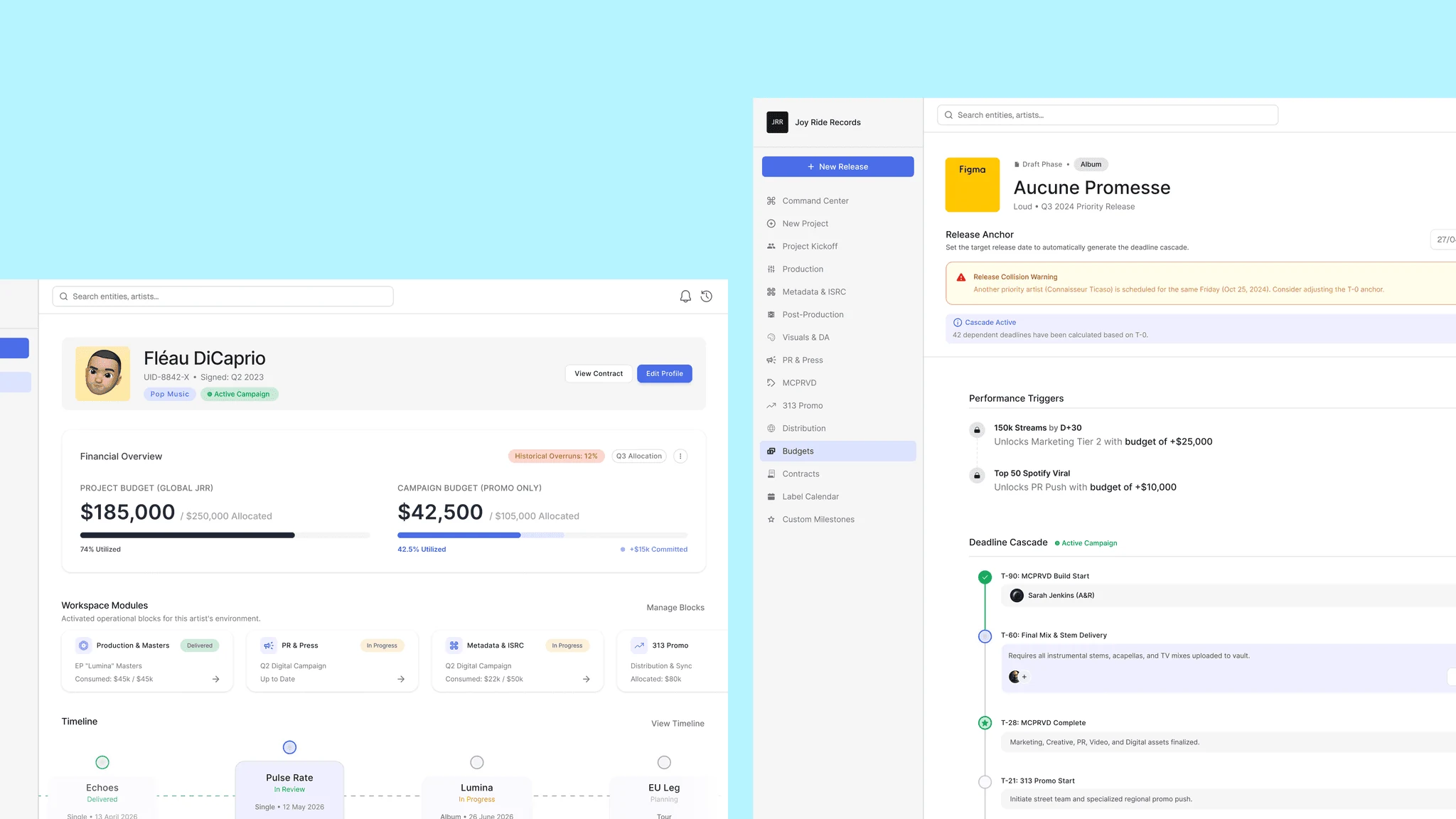
- Artist project workspace
- Everything about an artist and their projects in one place: active projects, operational blocks, timelines and budgets.
- Artist view
- A deliberately different experience for artists, focused on progress, current goals, upcoming responsibilities and key project information.
- Release cascade
- The interconnected deadlines behind a release, laid out as a structured cascade so dependencies are visible.
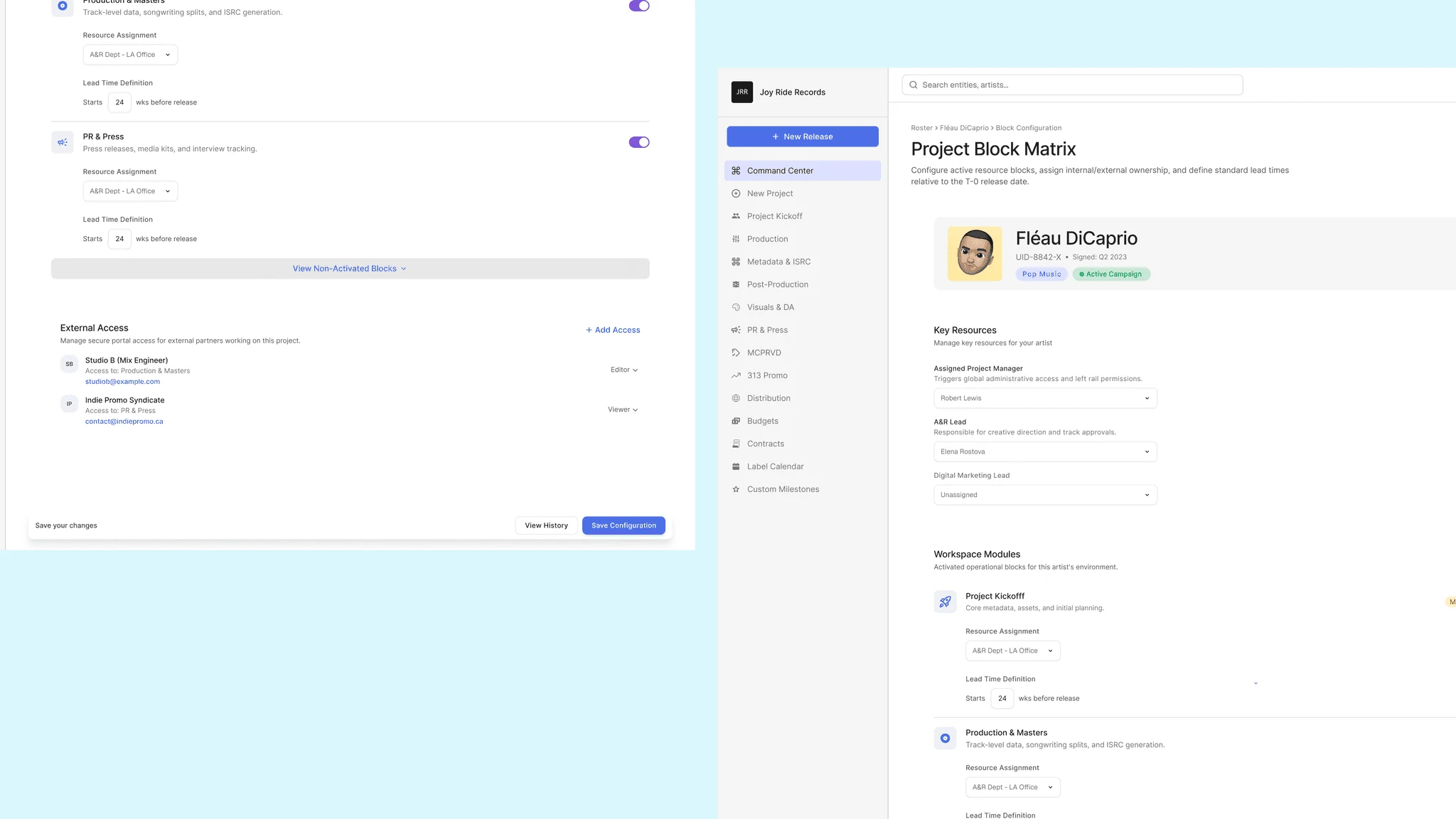
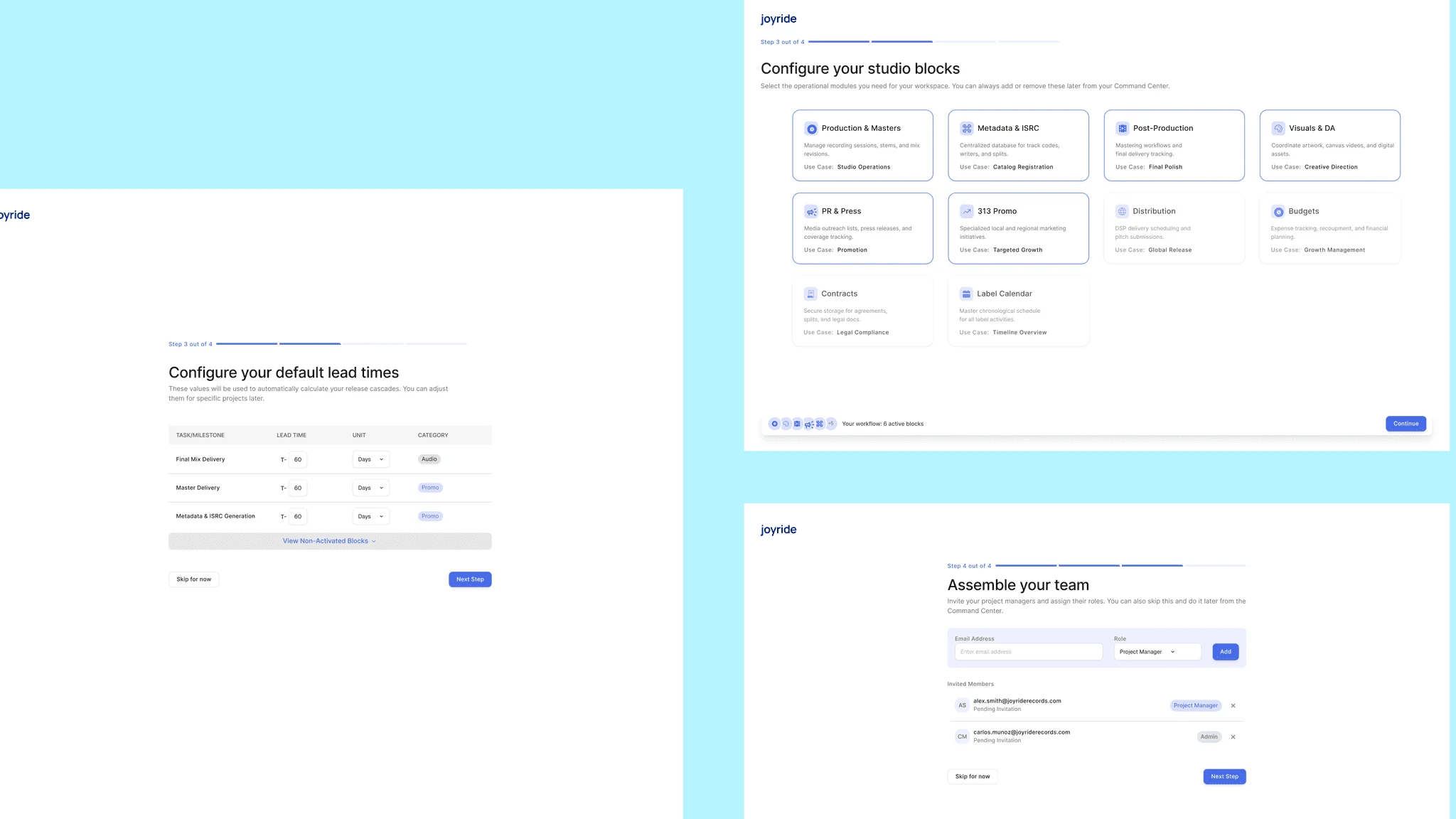
- Project configuration
- Project managers tailor each project by selecting the operational blocks that artist needs.
- Budgets and custom milestones
- Financial management built into the workspace, plus project-specific checkpoints beyond the default workflow.
- Onboarding and project kickoff
- Guided setup for a new organisation, and a structured kickoff that gathers what a project needs before it goes live.
- Design system
- Consistent rules across the product, with room for each module to adapt its layout to its workflow.
Where it stands
The work gives Joyride Records a scalable foundation for the platform. The client confirmed the direction closely matched their vision, and the project is now moving into full product design.
The structure already in place is designed to take on automation and AI-powered workflows as they are introduced.
Have something like this to build?
Tell us where you're starting from and we'll figure out the right direction together.
Book a call (opens in a new tab)